
Woolshed renovation
TaumarunuiWoolshed
A woolshed rebuilt around the way the stock moves
- Category
- Woolshed renovation
- Built for
- Maire Hills, Clinton's father's farm
- Location
- Maire Hills, Taumarunui
04Maire Hills
The shed
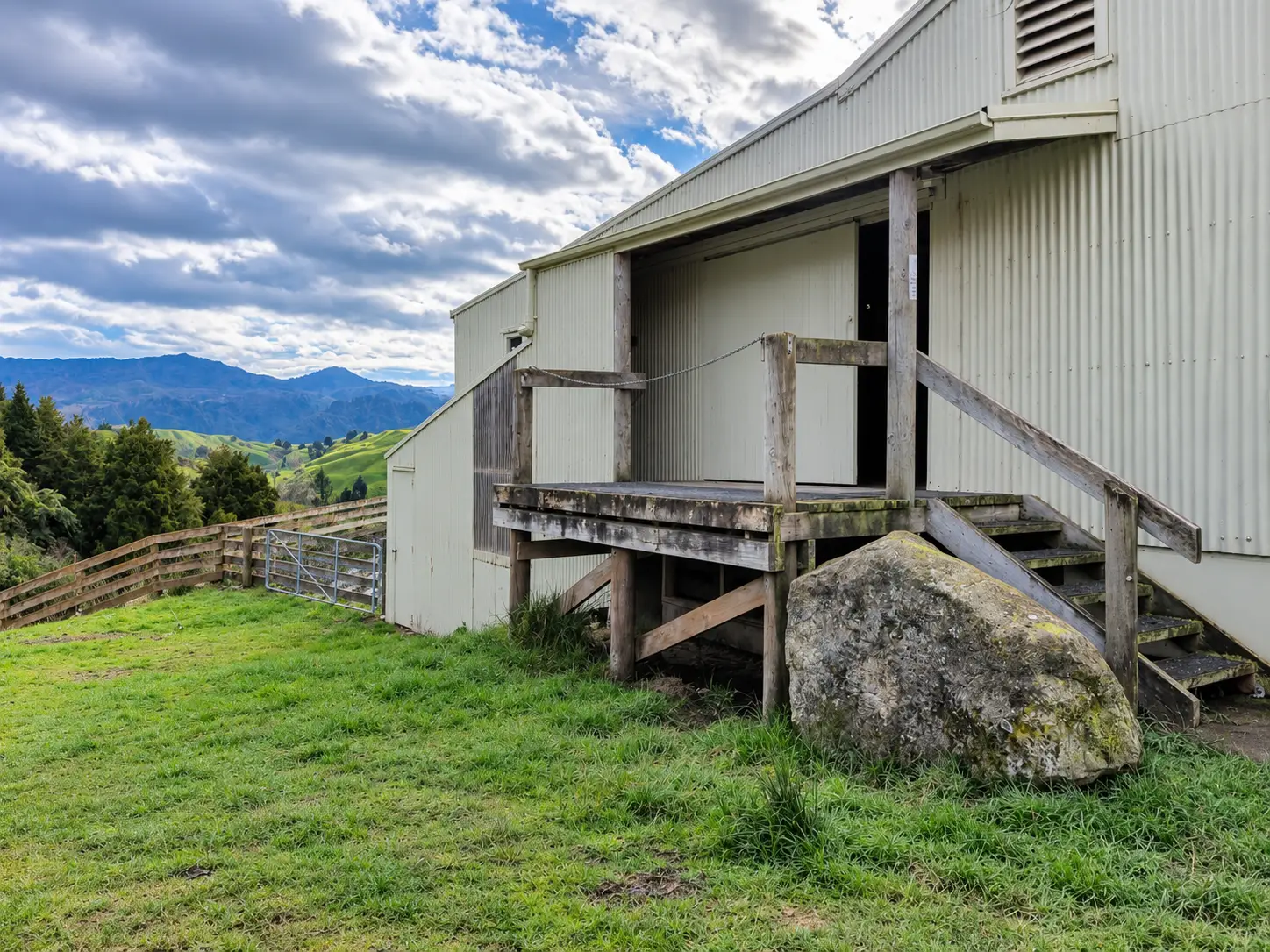
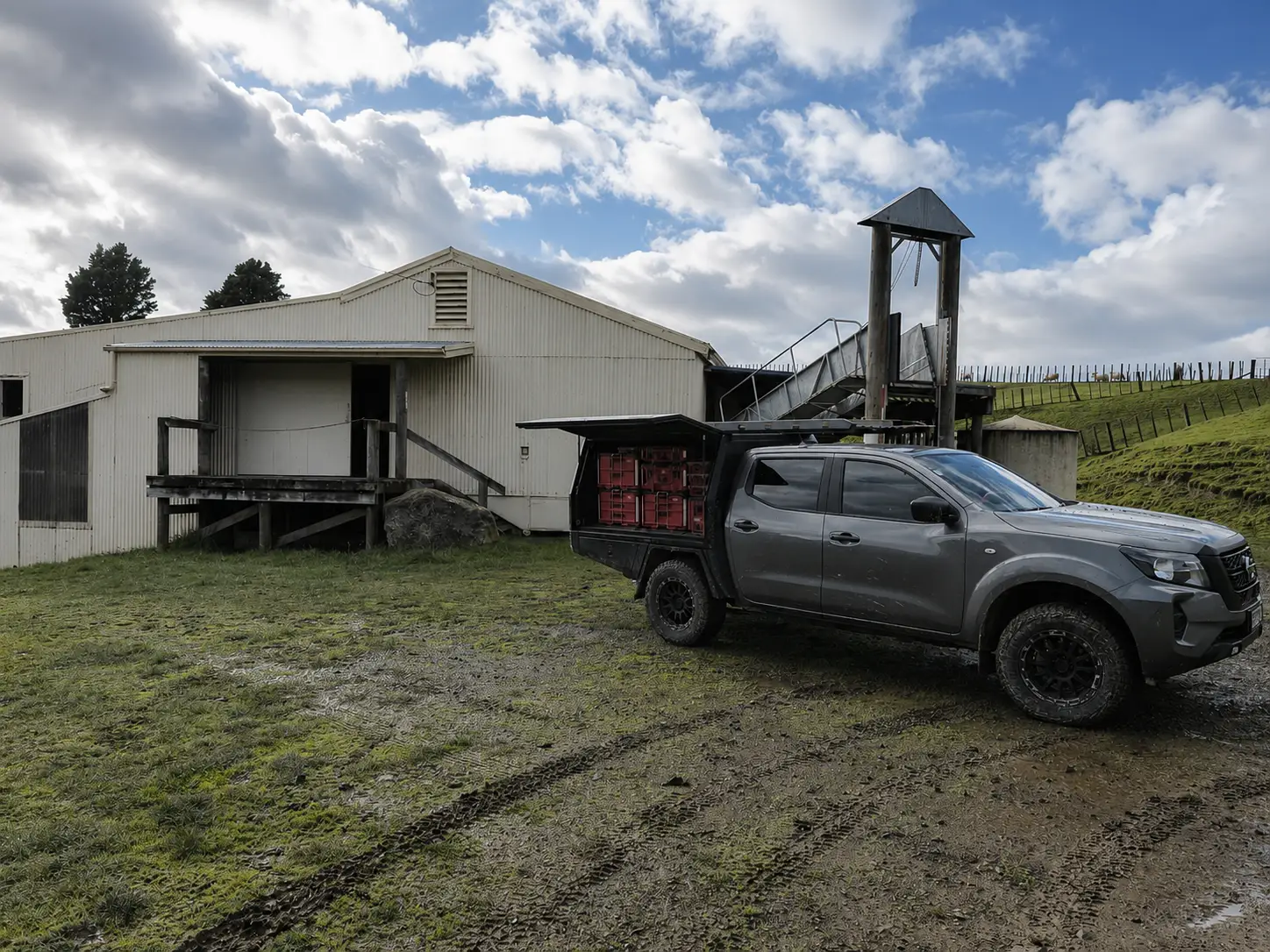
A working woolshed on the family farm at Maire Hills, and a renovation rather than a replacement: the building stayed, and the parts of it that sheep, shearers and staff actually touch were rebuilt. Clinton worked on the job by himself, bringing in an engineer for the one component that needed fabricating rather than building.
The board
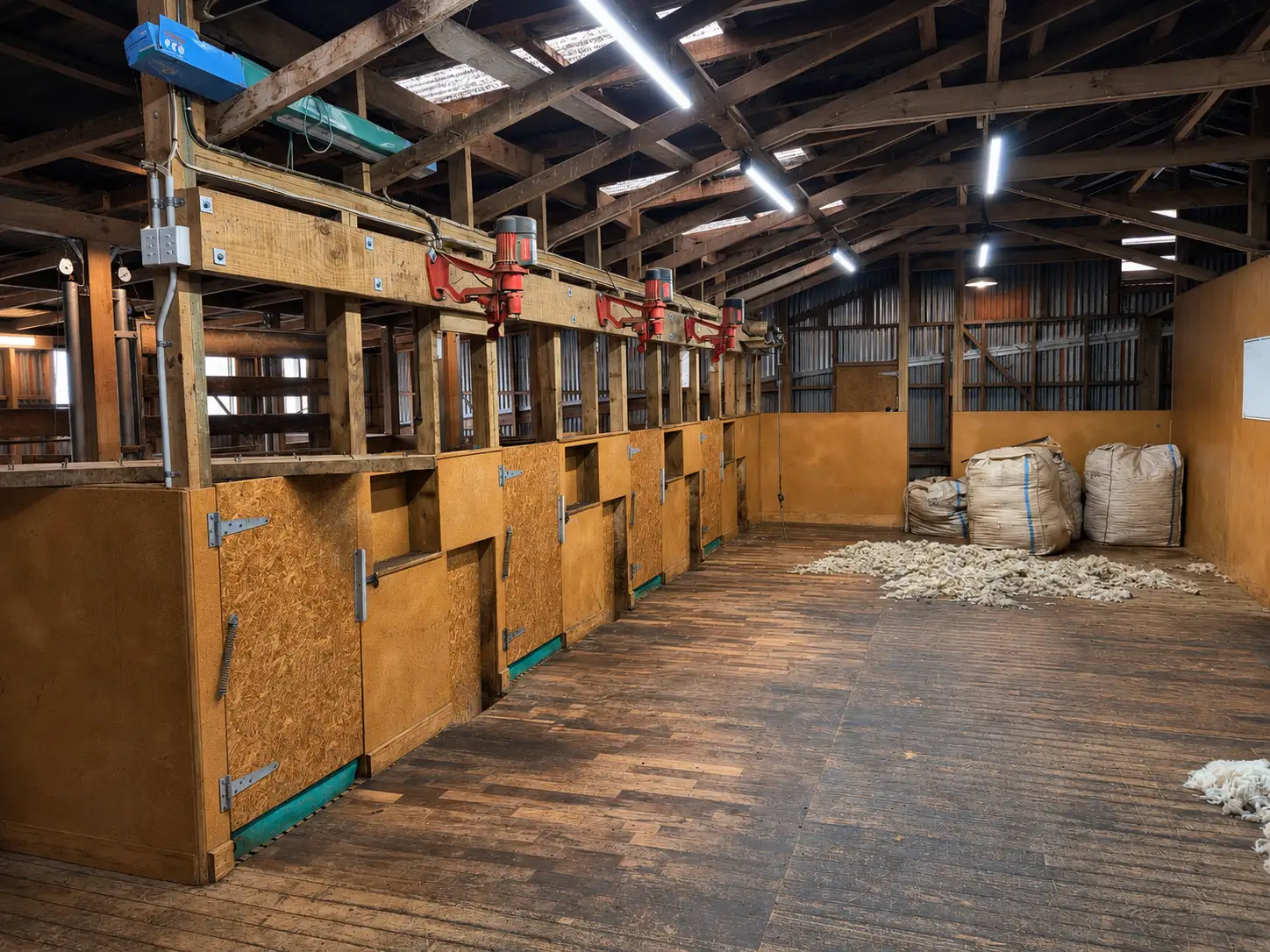
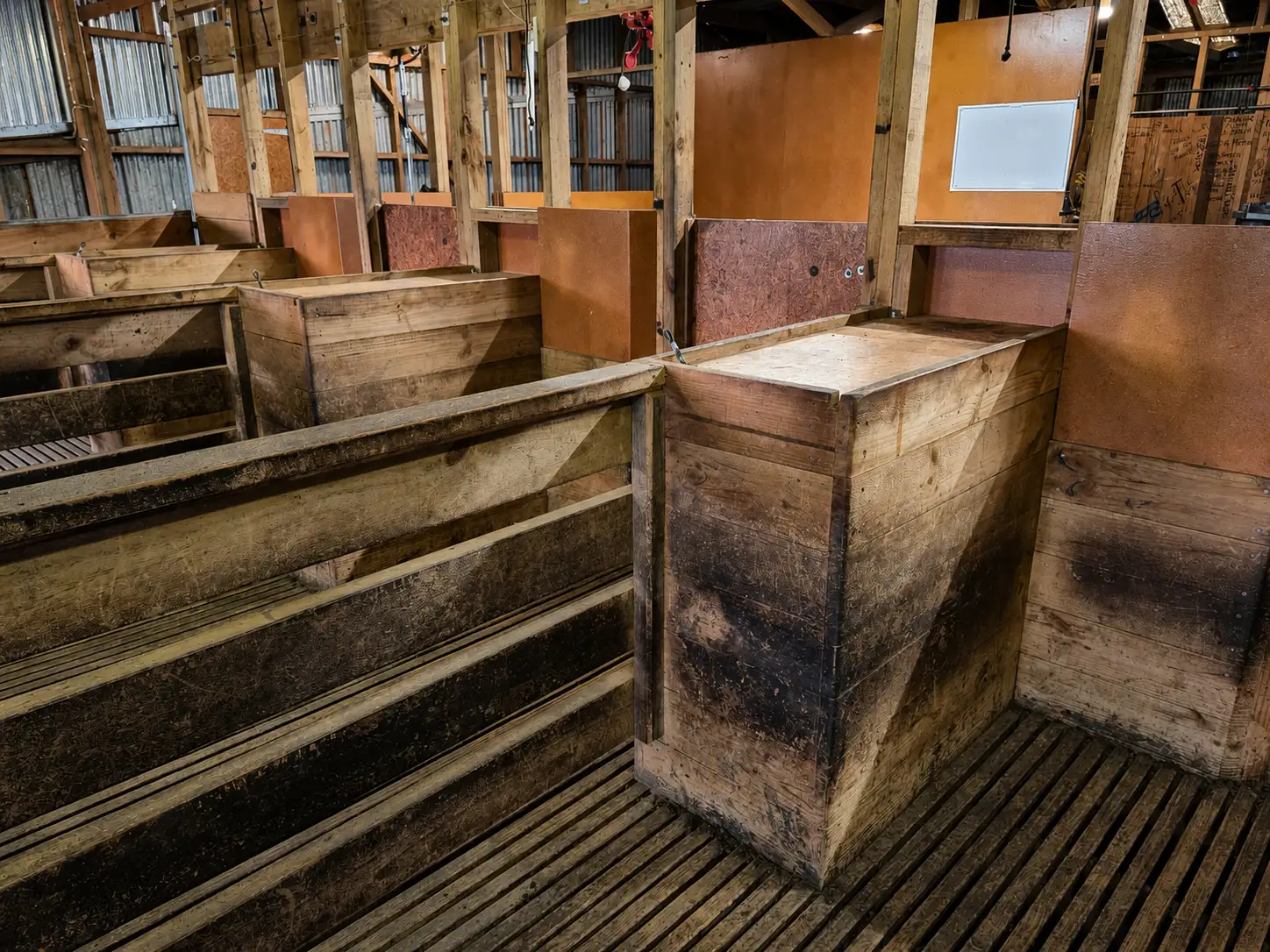
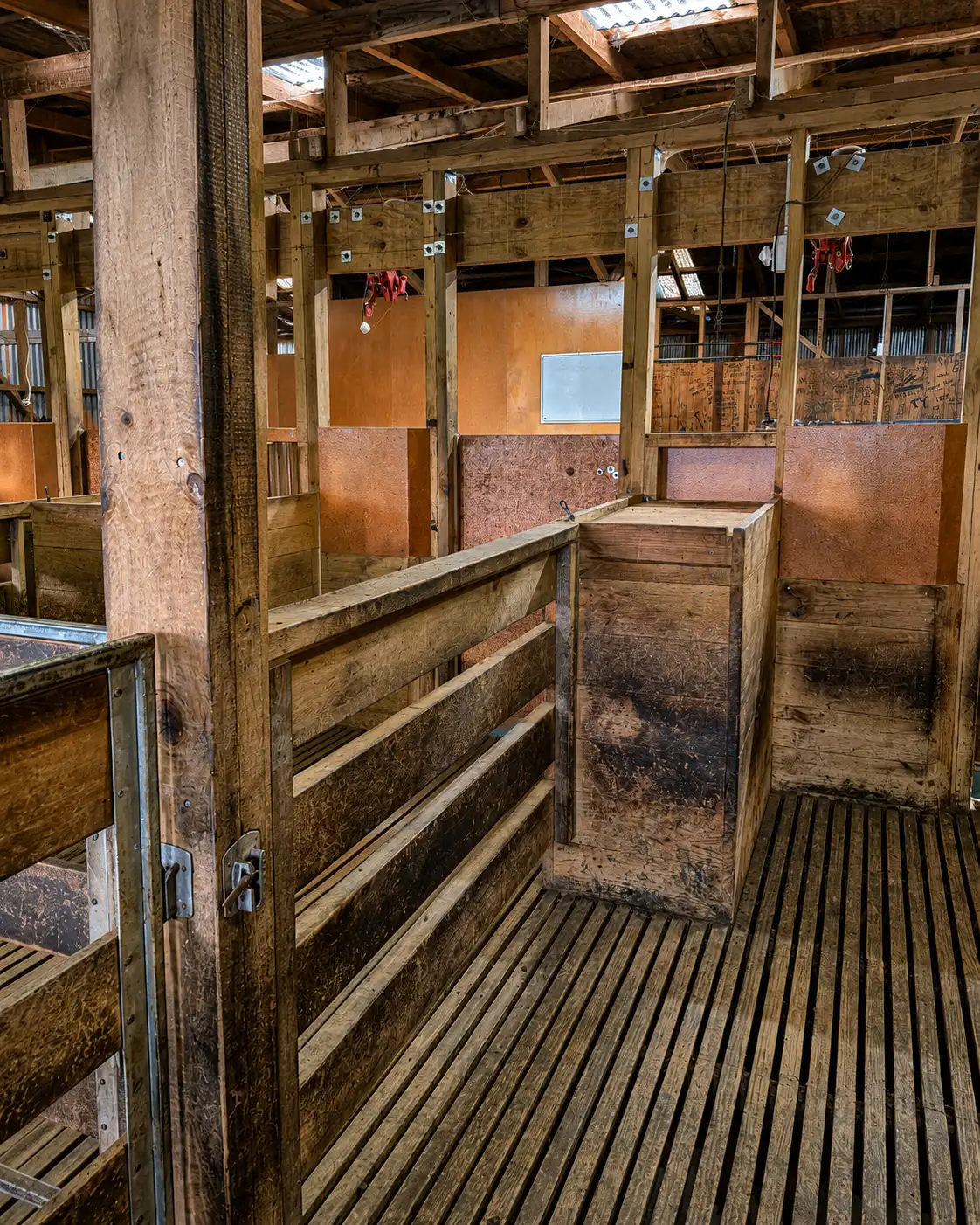
The wall behind the shearing board was rebuilt completely, and it had four jobs to do at once: carry the catching-pen doors, take the chute system, give the shearers somewhere to put their gear, and provide the beam the shearing machines mount on. Getting those to share one wall is the difference between a shed that works and a shed that has been added to.
The doors
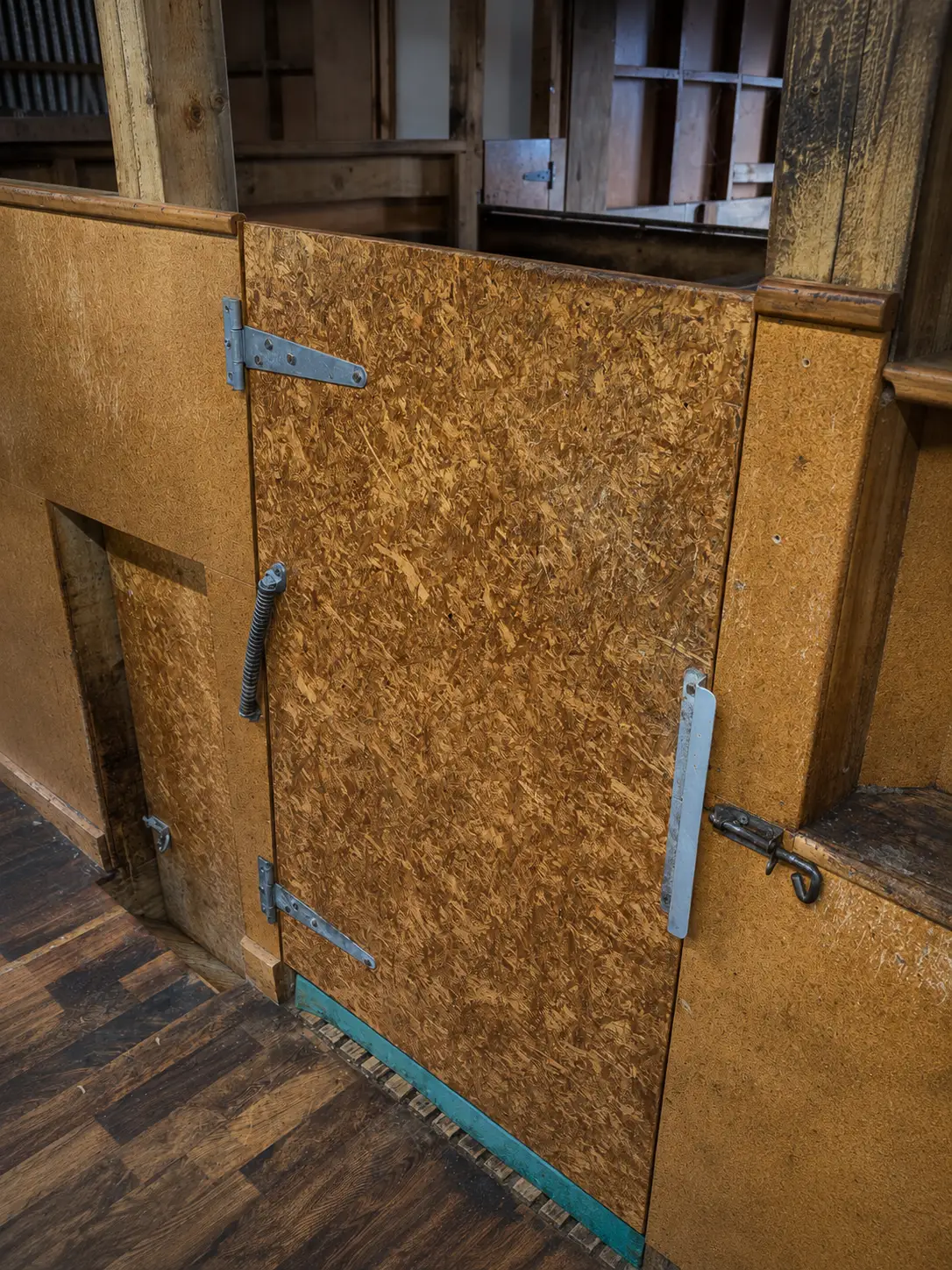
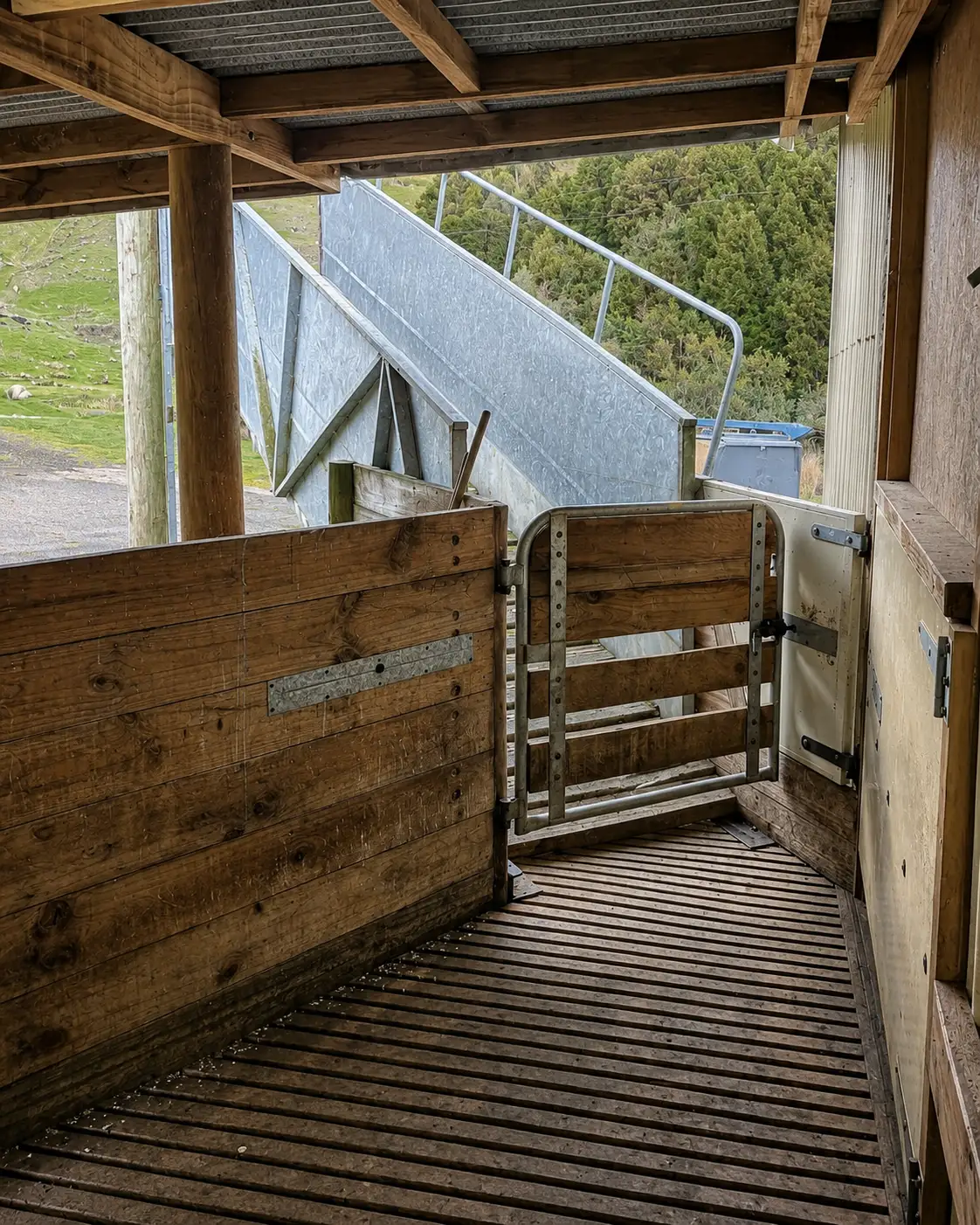
The catching-pen doors are Strandfloor-type sheet on bolted hinges, with bolted slam catches on the doors and the other working components. Bolted rather than screwed or welded, because a farm door is opened and slammed thousands of times a year and the fixing is what gives out first. Clinton reports that in 2026 — some thirteen or fourteen years on — those doors, hinges and catches are all still operating well.
Pens, chutes and grating
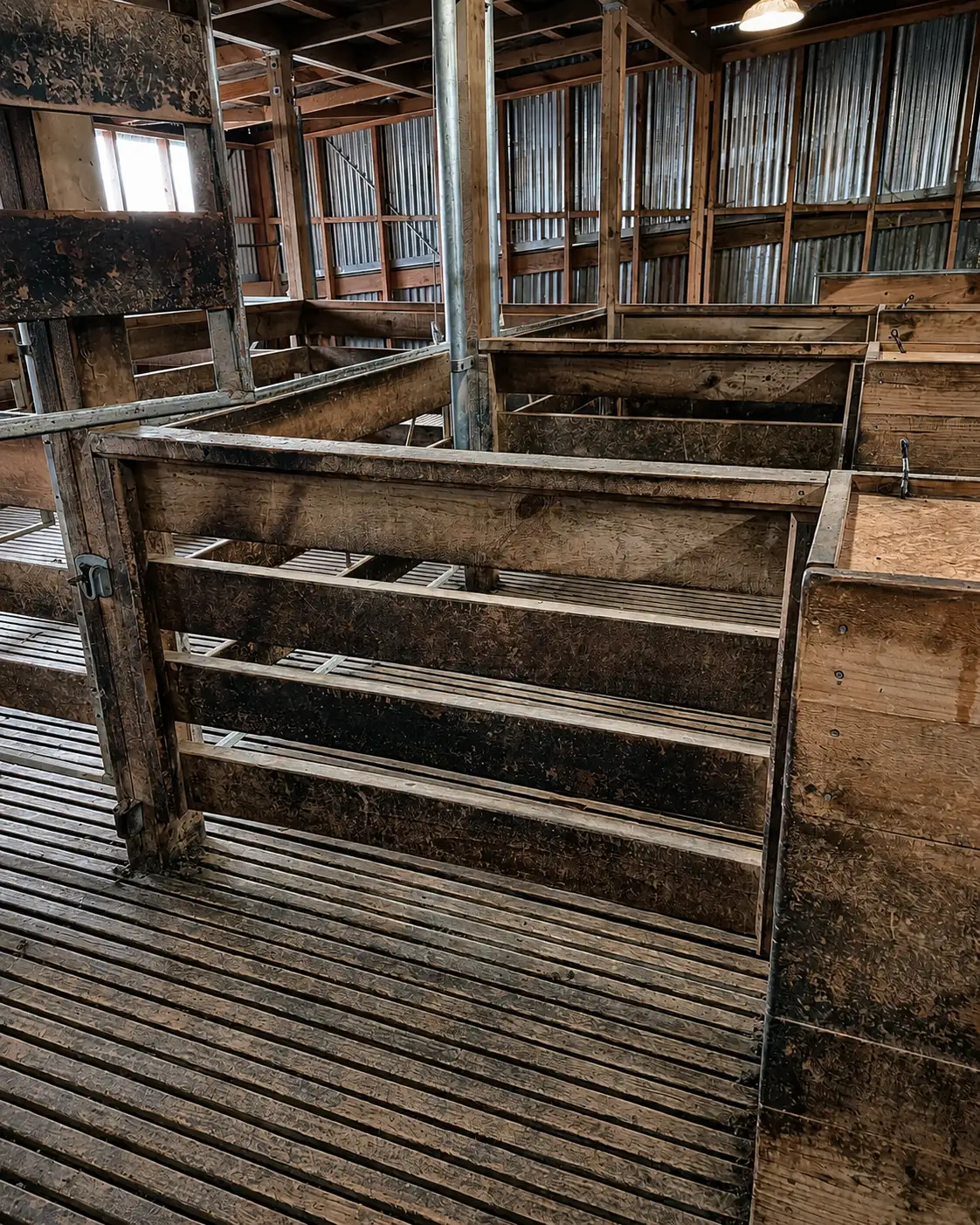
The catching pens were rebuilt, the grating through them replaced and the chute systems rebuilt with them. The decisions that matter here are not visible in a photograph: which way the grating runs, how much light gets under the floor, where a gate sits when it is open so it is not in the way of stock or people, and where a catch lands so it can be reached. Lift-and-swing gates were used where a gate had to clear the working area entirely.
Built to be repaired
The rail components were designed so a worn section can be replaced on its own, without pulling out and remaking more than has actually worn. On a farm building that gets no maintenance budget and no downtime, designing for the repair is worth more than designing for the finish.
Bird-proofing that still works
The client wanted the shed bird-proofed, and the catch was that bird-proofing usually makes the handling systems awkward to use — a cover nobody can be bothered deploying is not a cover. Clinton built covers for the chute openings that deploy easily, and closures and top doors for the loading openings, so the shed shuts up without anyone fighting it at the end of a day.
Raising the loading area
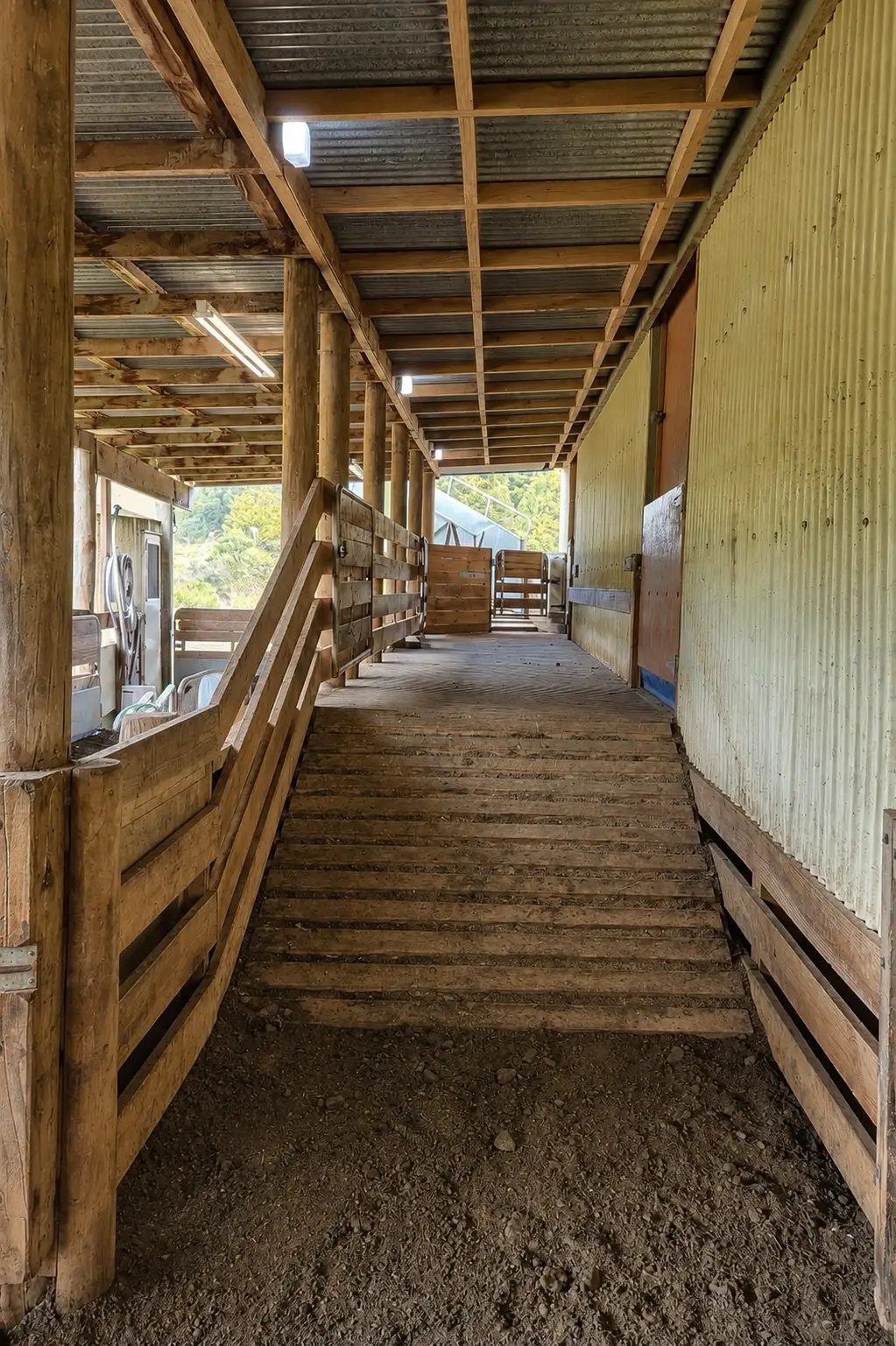
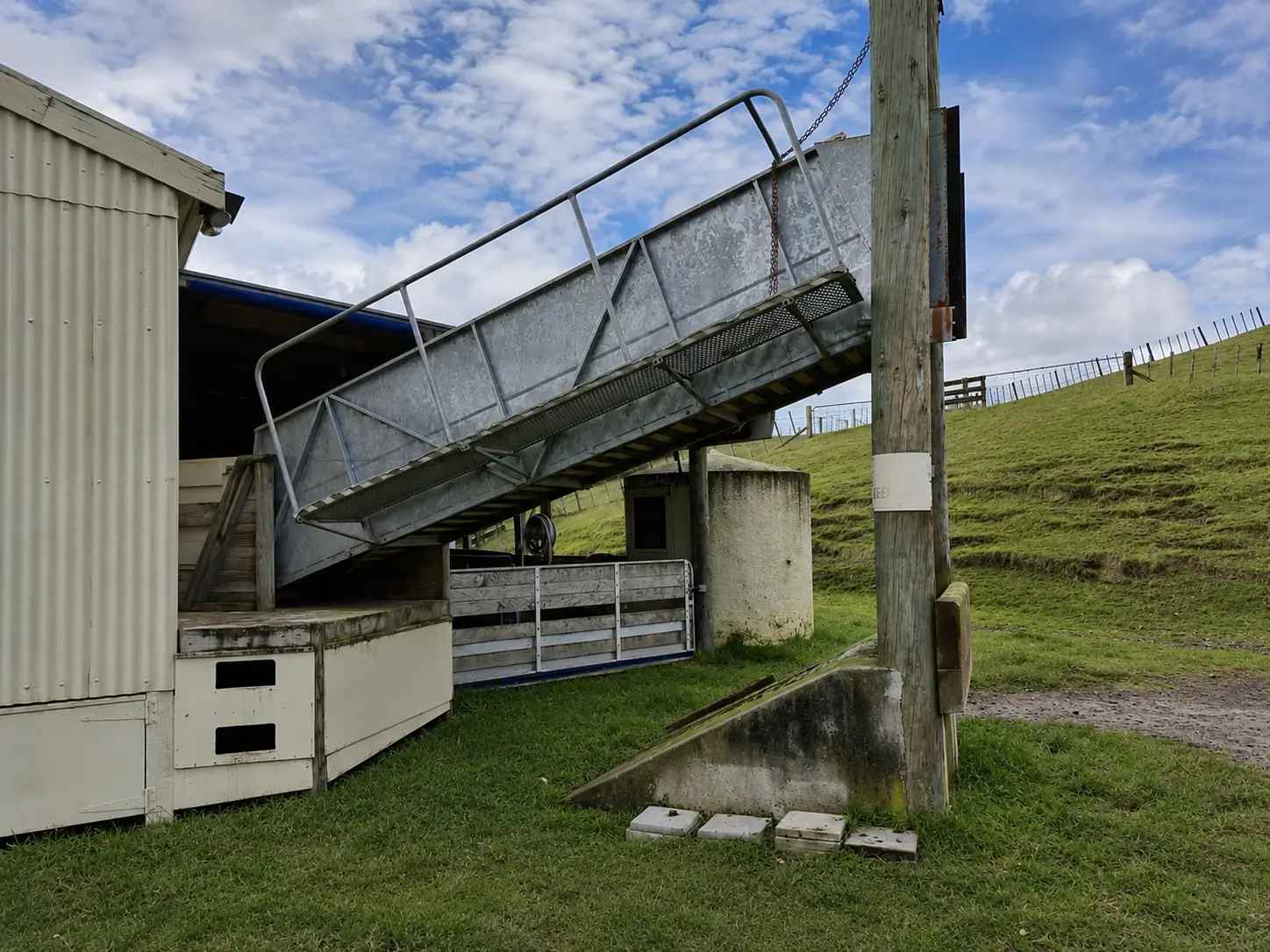
The old loading area sat below the woolshed floor and gave very little room to force sheep. The external loading arrangement into the shed was rebuilt and the grating and floor level in the loading area raised to woolshed level, which turned a step and a pinch point into a proper forcing area feeding either the shed or the race.
The loading race
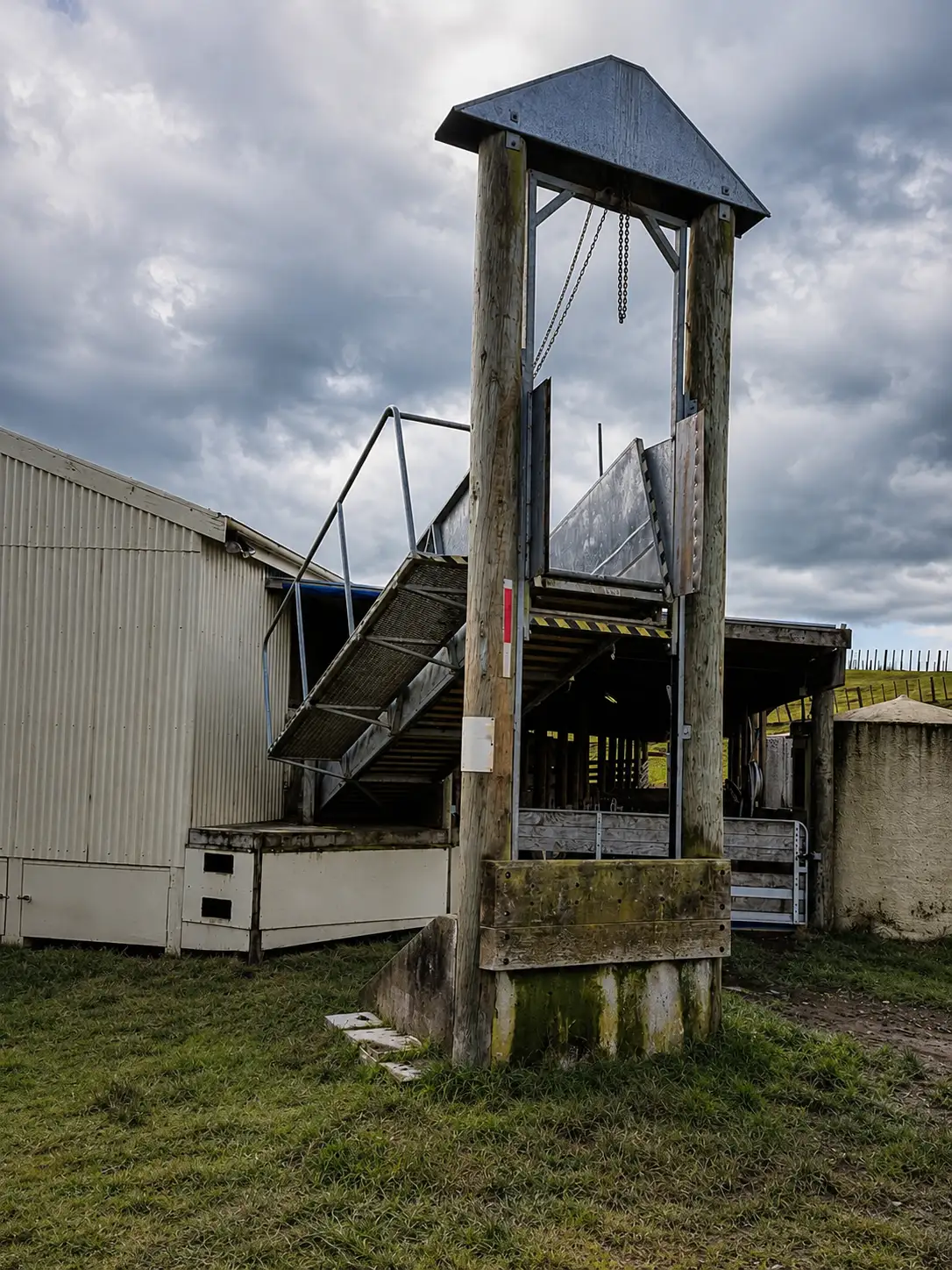
The race was a collaboration, and the split is worth stating plainly: Clinton and an engineer worked out the design together, the engineer fabricated the race on the farm, and Clinton installed the poles and helped install the race and its track system. Clinton reports it is configured for sheep, that it will service trucks up to three decks, that it holds lambs securely on the way up, and that the truck drivers have been complimentary about it.
Thirteen years of use
For Clinton the point of this job is how much thought a woolshed takes before any of it gets built — grating direction, light under the floor, how a gate hangs when it is open, where a catch sits, how easily a part can be swapped later. The evidence that the thinking was right is not a photograph taken on handover. It is that the systems are still being used, and still working, more than a decade after they went in.
Projects we think you’ll like also
New builds
Prestwich
A six-bedroom family home stepped into a hillside
New builds
Foxham
A house for eight, held to three hundred square metres
New builds
Ōtaki Gardens
A three-bedroom showhome framed, closed in and clad
Features
Ollie's Deck
A kwila deck built along a covered side of a house
New builds
Mo Street
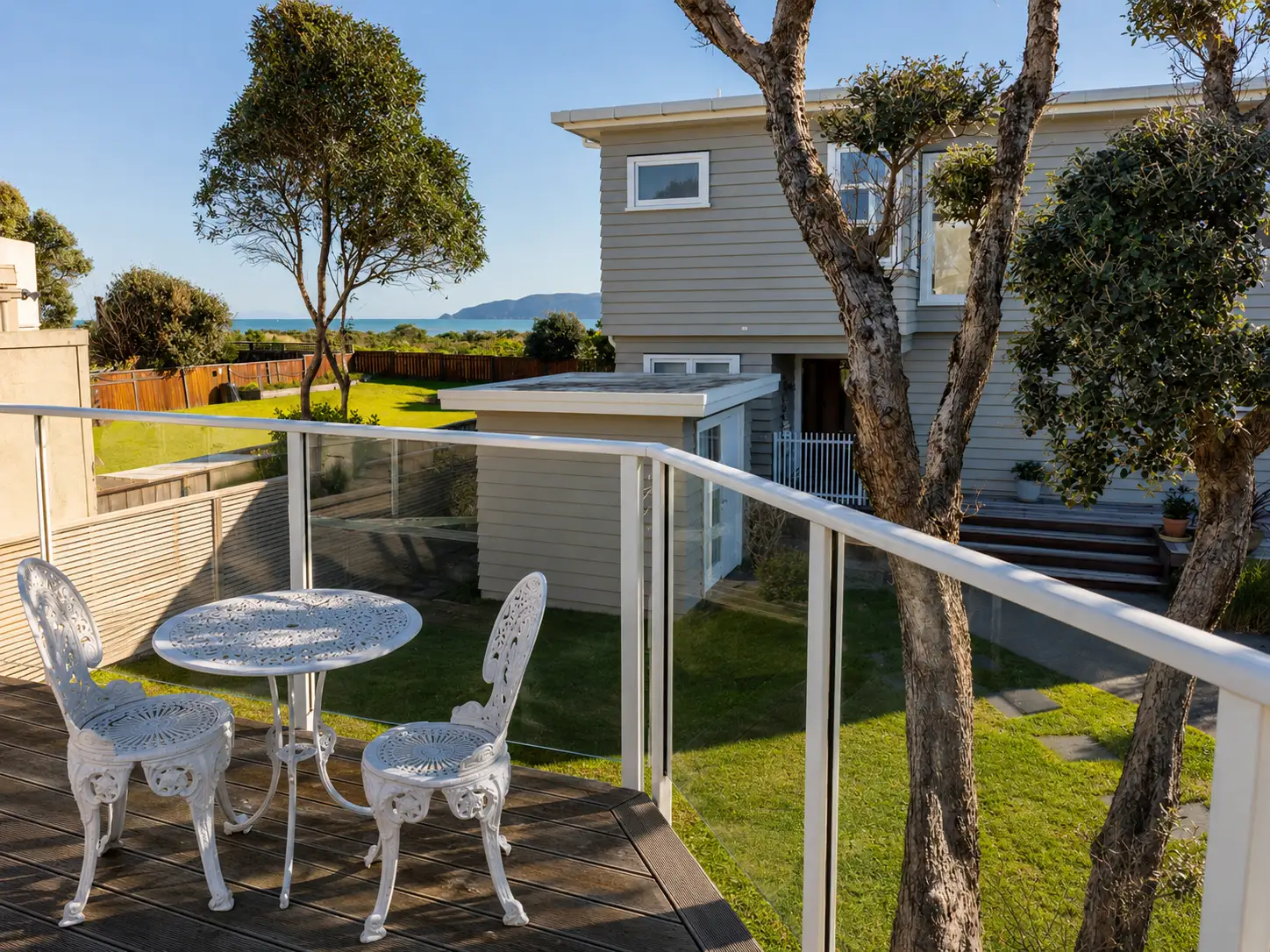
A new house framed on a platform above the coast
New builds
Manly Street
Guest quarters above a new double garage
FAQ
Questions
Before you enquire
Answers to the most common questions we get before a project begins. The full set — pricing, timelines, changes, consent and more — lives on the common questions page.
It depends on the scope of the work and the site — some work needs consent, some is exempt, and the thresholds change, so we'd rather look at your actual job than hand you a generic rule.
Where consent is needed, we handle the application and the council process as part of the job, while being straight about one thing: the consent legally belongs to the property owner, and the council's clock — 20 working days on a complete application — is the council's. We'll tell you honestly at the start what your project is likely to involve.
Duration depends on scope and, where it applies, consent — councils have a statutory 20-working-day clock on complete applications, and a request for more information stops that clock. We give a real timeframe when we quote, not a generalisation here.
On staying with it: we run one main project at a time. Once your job starts, it is the job — you see consistent progress, not weeks of empty site while the builder is somewhere else. Rachel, who named timeframes as her worry before her own project, describes being kept informed throughout and the process as transparent and upfront.
Topp Shelf is run by the builder who owns it: Clinton prices the job and builds it.
When a trade is on site — plumbing, electrical — Clinton remains the one responsible to you. You deal with the builder who carries the job from the first conversation to the last day on site.
We're a Kāpiti-based building company working across Horowhenua, the Kāpiti Coast, Porirua, the Hutt Valley and Wellington City.
How far we'll travel depends on the job — rural builds travel further than small repairs — and the callback settles it in one conversation.